
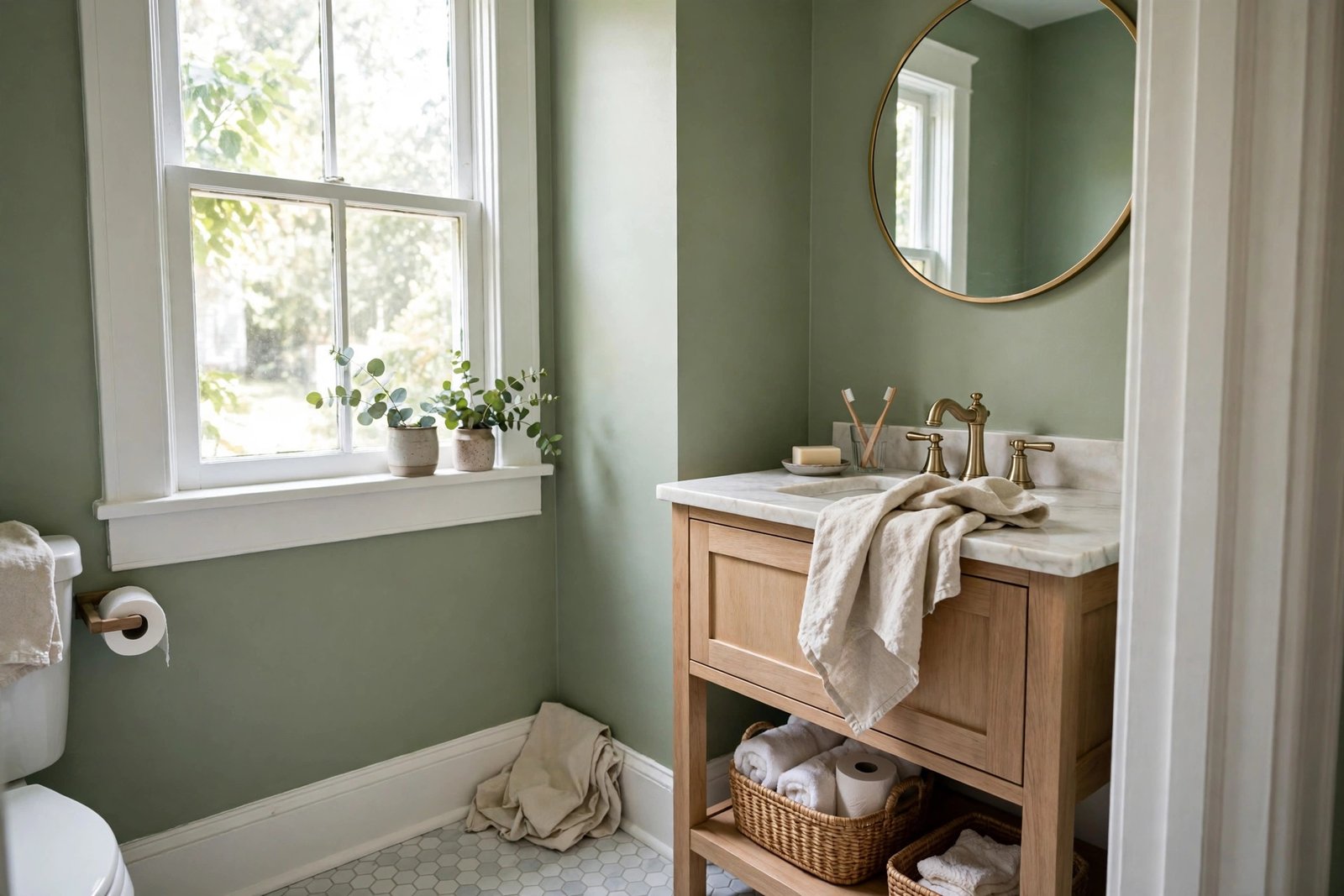
Quick answer: There’s no honest flat price for painting a bathroom, because a bathroom isn’t just a small bedroom: the price follows the size of the room, whether it’s walls only or the ceiling too, how much moisture and mildew prep the walls need, and how much of the wall is tile, mirror and fixtures rather than paintable surface. A small powder room is a quick job; a large ensuite with a high ceiling and heavy steam damage is a different job altogether. Either way, you get an exact, written price before any work starts.
The 7 things that set the price
1. Bathroom size — and how much wall there actually is. A compact powder room has very little paintable wall — the vanity, mirror, tile and fixtures cover most of it. A full family bathroom or ensuite with a separate shower, a soaker tub and a high ceiling has far more surface, far more cutting-in around tile edges and fixtures, and the quote reflects that.
2. Walls only — or the ceiling too. Bathroom ceilings take years of steam and often show yellowing, water spots or peeling long before the walls do. Fresh walls make a tired ceiling stand out, so most bathrooms get walls and ceiling together while everything is already covered and masked.
3. Moisture and mildew prep. This is the single biggest difference between a bathroom and any other room. Steam leaves a film on walls and ceilings, and damp corners can grow mildew that paint will not cover or stick to. Affected areas have to be cleaned, treated and sealed with a stain-blocking primer before anything else happens. Skipping this step is the main reason bathroom paint peels or bubbles early.
4. Tile, fixtures and fittings. A bathroom is full of things that don’t get painted — tile surrounds, mirrors, vanities, toilets, tubs and shower glass. Each one has to be masked cleanly, and the cutting-in around them is slow, detailed work. More tile and more fixtures means less paintable wall but more careful prep around the edges.
5. Colour change. Refreshing the same colour family is the simplest path. Going from a dark or saturated colour to a light one (or the reverse) takes a proper primer coat and more finish coats to cover cleanly, which adds time and paint — especially on a ceiling that has yellowed with steam.
6. Paint quality and finish. Bathrooms get a moisture-resistant kitchen-and-bath paint in a scrubbable satin or semi-gloss finish — it stands up to steam, wipes clean, and resists mildew far better than a flat bedroom paint. Better paint covers in fewer coats and survives years of showers, and it’s a small part of the total price compared to labour.
7. Working around a bathroom that’s still in use. A bathroom can’t just be emptied like a bedroom. The vanity, toilet and tub are masked in place, the work is sequenced so you can still use the room in the evening, and everything is uncovered and wiped down at the end of each day. It’s all doable — it just takes more care than an empty room.
How the pricing works
Most painters price a bathroom after seeing it — by the room’s size, condition and scope, not by a menu price. Either way, the only number that matters is the written one: a quote that lists the full scope (walls, ceiling, trim, coats), with GST shown as its own line, before work begins. That’s how we quote every job.
If you’re comparing quotes, compare the prep, not just the price. The cheapest quote that paints straight over mildew or steam film is the one most likely to be peeling above the shower within a year.
For whole-house painting costs, see our guide: How Much Does It Cost to Paint a House in Metro Vancouver?
What the work actually involves
The vanity, toilet, tub and floors are covered and protected edge to edge. Walls and ceilings are washed, mildew is treated, dents and cracks are filled and sanded, and stains get a blocking primer. Then two finish coats go on the walls with clean cut lines at the tile, ceiling and trim. For walls and ceilings elsewhere in the home, see our interior painting page.
How to get your exact price
Send us a few photos of the bathroom, or book a free in-person quote — we can usually come by within about 2 days. You’ll get a written quotation with the full price and the schedule before you commit to anything: request a free quote.
FAQ
How long does it take to paint a bathroom?
Most bathrooms take a day or two, depending on size and how much moisture prep is needed. A small powder room can be faster; a large ensuite with mildew treatment and a high ceiling takes longer — your quote includes the full schedule.
Do I need special paint for a bathroom?
Yes — a moisture-resistant kitchen-and-bath paint in a scrubbable satin or semi-gloss finish. Ordinary flat paint absorbs steam, marks easily and peels sooner in a bathroom, so the right paint is built into the quote.
Can you paint over mildew or water stains?
Yes — but not directly. The area is cleaned and treated first, then sealed with a stain-blocking primer before the finish coats. Painting straight over mildew just traps it under the paint, so the prep is built into the quote.
Should the ceiling be painted too?
Usually, yes. Bathroom ceilings take the most steam and are often the first surface to yellow or peel. Since everything is already masked for the walls, adding the ceiling is the best value while we’re there.
Leave a Reply