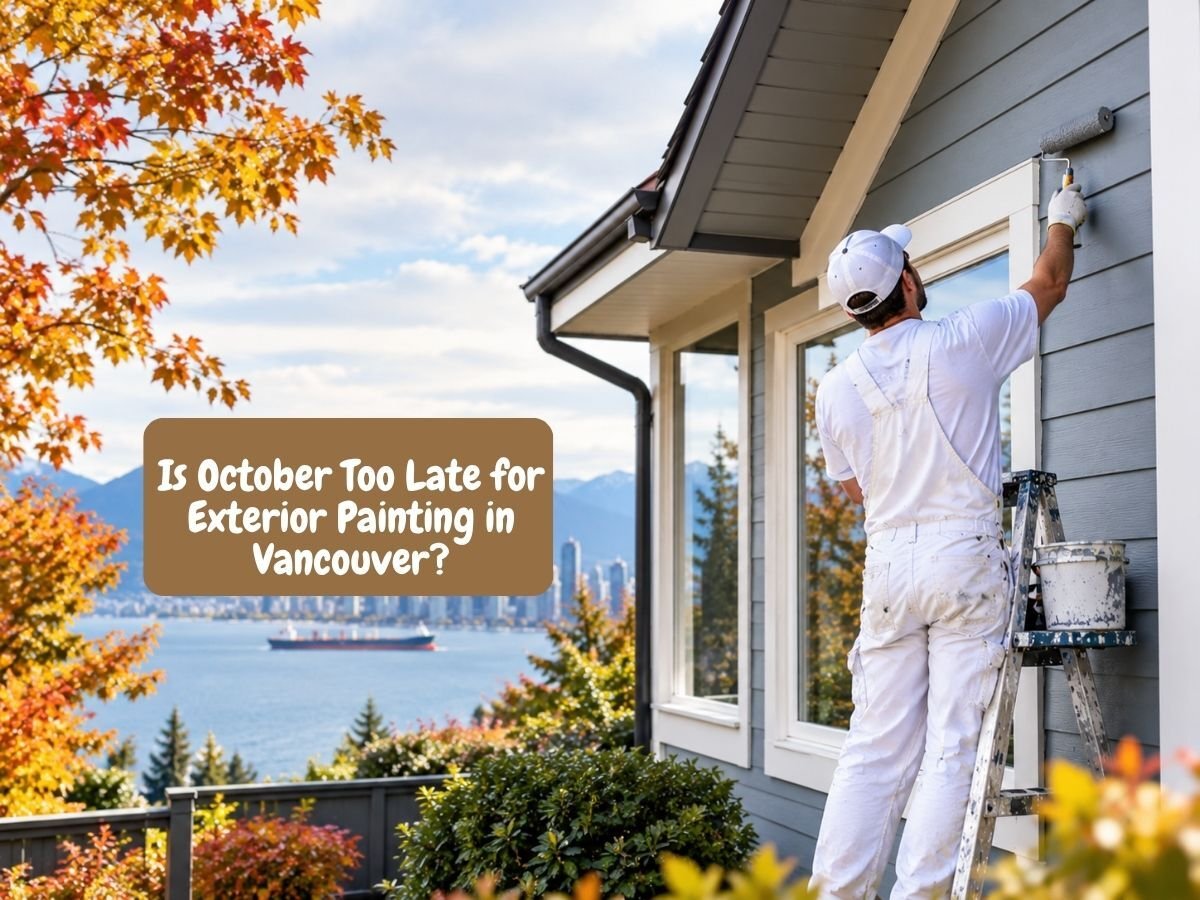
What October Weather Means for Exterior Painting in Vancouver
Fall is when the region’s wet season typically begins to settle in. Rain becomes more frequent, mornings are often damp, and daylight hours shorten. None of this makes painting impossible, but each factor affects how paint goes on and how well it holds.
Rainfall and Humidity
Paint needs to dry without being washed or soaked. Rain during or soon after application can cause streaking, poor adhesion, or a weakened finish. High humidity slows drying even on days without rain, and surfaces that stay damp overnight can hold moisture that traps itself beneath the new coat.
Temperature
Exterior paints and stains have a minimum application temperature, and it varies by product. Some formulations are designed for cooler conditions, while others need milder weather. The temperature also needs to stay within range while the paint cures, not just at the moment of application. Always check the manufacturer’s data sheet for the exact limits.
Drying Versus Curing
These two terms are often confused. Drying is when the surface feels dry to the touch. Curing is the longer process in which the coating hardens fully and reaches its intended durability.
Cool, damp weather can slow both. A coat that looks fine by afternoon may still be vulnerable to dew, fog, or an evening shower. That is why the forecast for the next day or two matters as much as the weather on the day of painting.
Surface Preparation Still Comes First
Good preparation matters in any season, and fall adds some extra challenges.
- Cleaning: Remove dirt, mildew, and loose paint, then allow the surface to dry fully.
- Repairs: Fix damaged wood, fill cracks, and sand rough areas.
- Priming: Prime bare or repaired spots so the finish bonds properly.
- Moisture check: Make sure siding and trim are dry before any coating goes on.
In October, drying time after cleaning can take longer. Rushing this step is a common reason for early paint failure.
When October Painting Can Work
October painting may be possible when several conditions line up:
- A stretch of dry days in the forecast
- Daytime temperatures within the paint manufacturer’s specifications
- Low enough humidity for surfaces to dry
- Enough daylight for the work and for the coating to set before evening dew
If the forecast offers a reliable dry window, a well-planned project can go ahead. Painters often work in sections, following the sun and avoiding damp areas.
When to Postpone Exterior Painting
It is usually wise to wait if:
- Rain is expected during or shortly after application
- Temperatures fall outside the product’s recommended range
- Surfaces remain wet, foggy, or covered in heavy dew
- The forecast shows several days of persistent damp weather
Postponing can feel frustrating, but painting in poor conditions can shorten the life of the finish and lead to rework. In some cases, it is better to complete preparation and repairs now and paint when conditions improve.
Practical Tips for Homeowners
- Ask about the product. Confirm the minimum temperature and drying requirements on the label.
- Watch the extended forecast. Plan around several dry days, not just one.
- Be flexible with scheduling. A good contractor may adjust dates as the weather changes.
- Prioritize problem areas. If you have peeling paint or exposed wood, protecting those areas before winter can be worthwhile.
- Get a written quote. It should explain the scope, preparation, and how weather delays will be handled.
- Consider timing for large projects. A full repaint may be better planned for a drier season, while smaller sections or trim can sometimes fit into a fall window.
Choosing the Right Painter for Fall Projects
Fall work calls for careful judgment. When comparing exterior house painters Vancouver has to offer, look for a licensed and insured contractor who inspects your home in person, explains the conditions needed for the products they use, and is honest about when it makes sense to wait. At Pixo Painting & Coating, every project starts with a free on-site quote so the scope and price are clear before work begins, and timing is discussed based on the surfaces and the weather.
The Bottom Line
October is not always too late, but it is a month that demands flexibility. If the weather cooperates and the paint’s specifications are met, Exterior Painting in Vancouver can still be done well. If conditions are poor, waiting for a better window will usually protect your investment.
If you are weighing your options, speak with Pixo Painting & Coating or another qualified team of exterior house painters Vancouver homeowners recommend about your home. You can reach out through our contact page to ask about timing and book a quote.